Concrete driveways are a durable and attractive addition to any home in the UK, especially in Hertfordshire, Essex, and the surrounding areas. However, over time, wear and tear can lead to annoying cracks that detract from your driveway’s appearance and can cause more extensive damage if ignored.
Fortunately, repairing cracks in a concrete driveway is manageable with the right approach. This article offers practical, concrete driveway repair tips from East Herts Surfacing & Driveways to help you spot cracks early, address them effectively, and maintain your driveway for years to come.
Whether you want to reduce future concrete driveway cracks resurfacing cost or tackle repairs yourself, this guide covers everything you need to know.
Spot the Sneaky Cracks Before They Widen
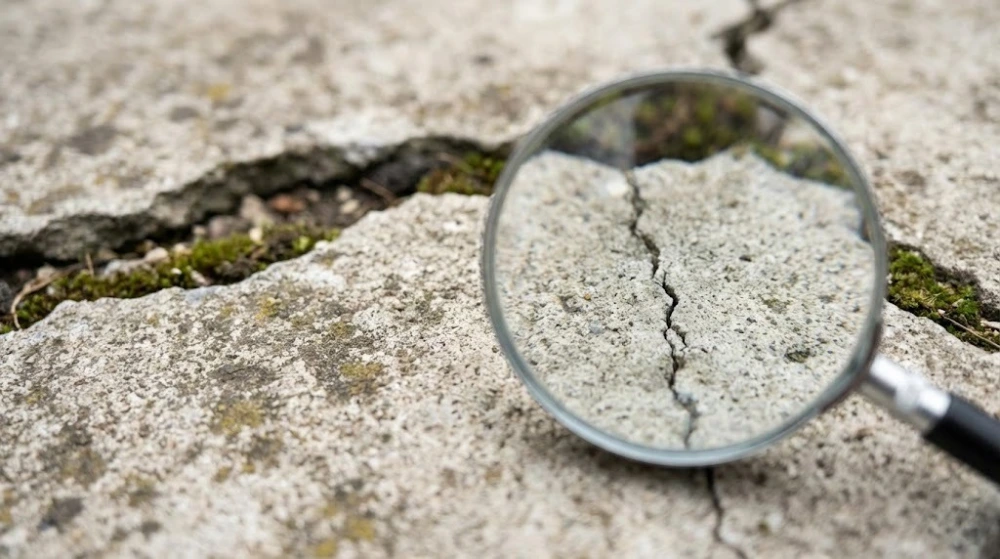
Small concrete driveway cracks may look minor, but they can quickly worsen due to weather, moisture, and daily use. Spotting cracks early, understanding their type, and inspecting them properly helps reduce repair costs, prevent safety risks, and protect your driveway from long-term structural damage.
Why Ignoring Small Cracks Can Cost You Big?
Small cracks may seem harmless at first, but they tend to expand with weather changes, water infiltration, and vehicle traffic. Ignoring these can increase the concrete driveway cracks repair cost considerably.
Early intervention saves money and prevents safety hazards such as tripping or further structural damage. In the UK’s varied climate, freeze-thaw cycles cause moisture trapped in cracks to expand and worsen damage.
Dry periods then allow more dirt and debris buildup, accelerating deterioration. Addressing cracks early helps maintain the concrete driveway cost within reasonable limits.
Types of Concrete Cracks You Should Know
Understanding the type of cracks helps in choosing the right repair method. Common cracks include:
- Hairline cracks: Thin surface cracks caused by shrinkage or minor settling.
- Medium cracks: Wider cracks between 3mm and 6mm caused by heavier loads or uneven base.
- Wide/deep cracks: Cracks larger than 6mm or extending deep, often needing reinforcement.
Identifying the crack type early is a key concrete driveway repair tip from East Herts Surfacing & Driveways.
Tools to Inspect Like a Pro
Proper inspection requires simple but effective tools. Use a chisel or angle grinder to check the crack depth, a wire brush to clear debris, and a good-quality shop vacuum to remove dust.
For convenience, a pressure washer can help clean the surface before a detailed inspection. Having these tools ready ensures you can evaluate both surface damage and deeper issues accurately.
Practical Steps to Repair Cracks in a Concrete Driveway
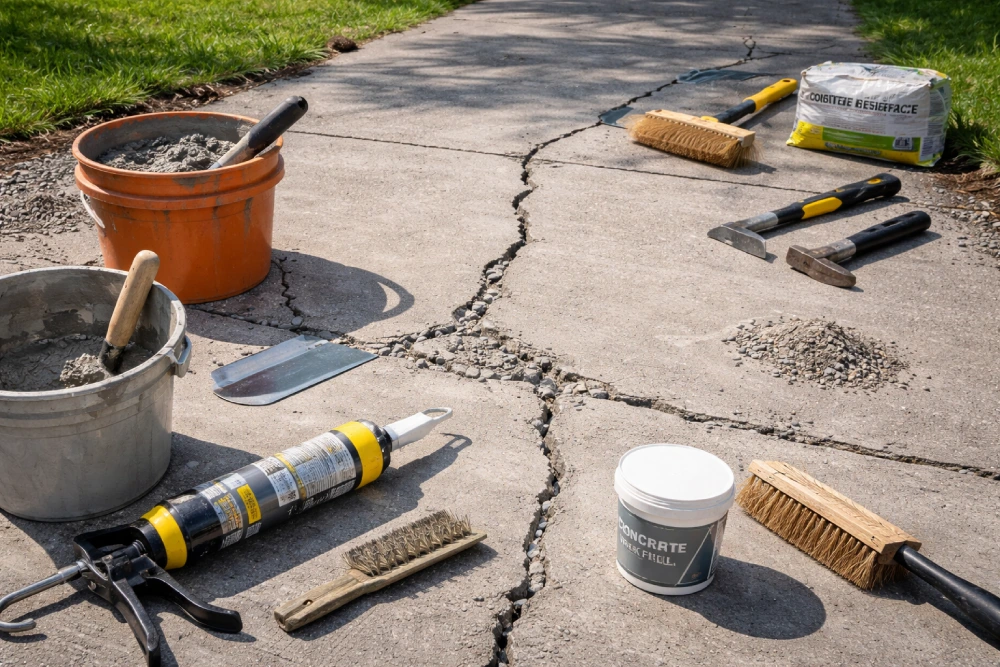
Cracks in a concrete driveway may look minor, but if left untreated, they can quickly worsen. Following practical, step-by-step repair methods helps restore strength, improve appearance, and prevent costly damage caused by moisture, weather changes, and everyday vehicle use.
Step 1: Clean and Open the Crack
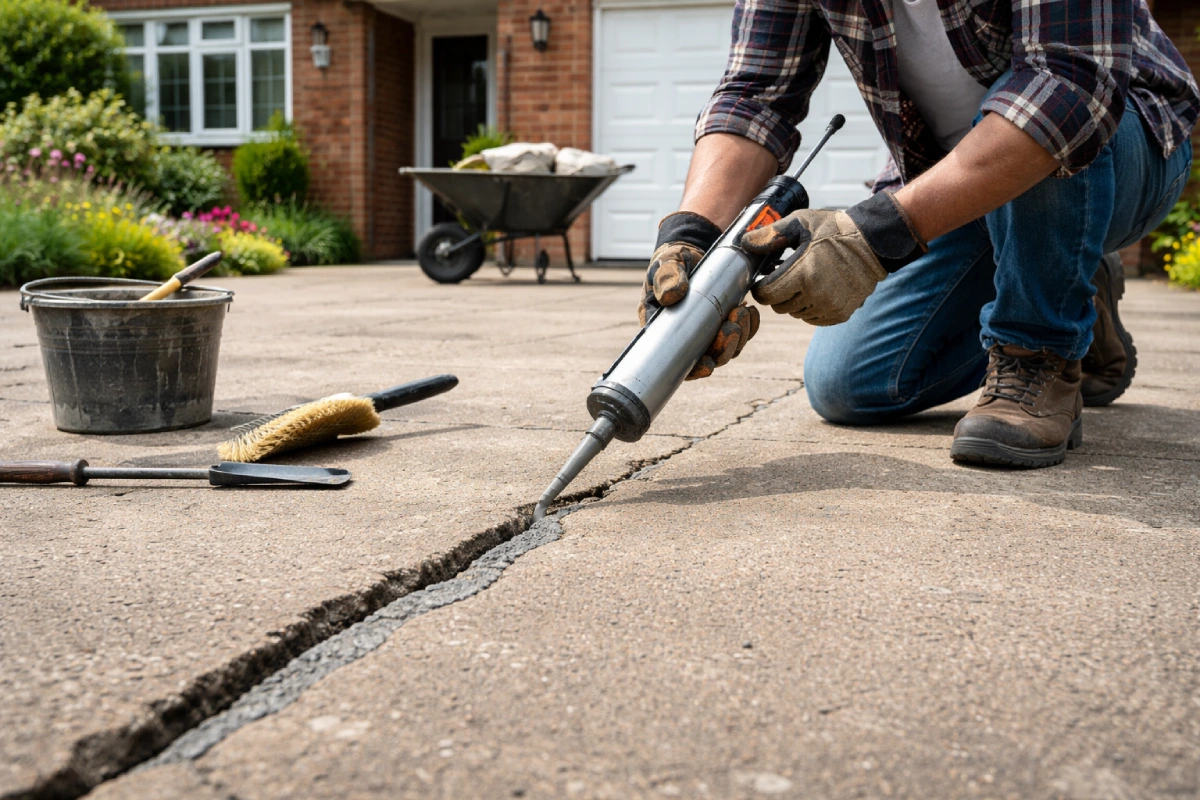
Begin by widening the crack into a V-shape using a chisel or angle grinder. This creates a better bonding surface for fillers. Remove all loose debris with a wire brush and vacuum thoroughly to ensure good adhesion. A clean crack reduces the risk of repair failure and is essential for a professional-looking finish.
Step 2: Dry and Prep the Area
Allow the crack to dry completely to prevent moisture trapping, which can cause filler materials to fail. If desired, apply a liquid bonding agent inside the crack to improve patch adherence, a valuable concrete driveway crack repair tip for lasting results.
Step 3: Fill the Crack Properly
Choose the right filler based on crack size:
- Use patching compound or masonry filler for small cracks.
- For medium cracks, apply two-part epoxy or polyurethane sealant.
- For deep cracks, insert a foam backer rod before filling.
Apply the filler smoothly with a trowel and slightly overfill to allow for shrinkage.
Step 4: Seal and Protect the Repair
Once the filler cures, sanding or lightly brushing the surface helps blend the repair with the surrounding concrete. Finally, apply a concrete sealer to prevent moisture ingress and reduce the chance of new cracks forming. Sealing is a crucial step that enhances longevity and helps control concrete driveway cracks’ resurfacing cost.
CTA: Book a No-Obligation Site Visit!
Crack-Filling Techniques Used by Professionals That Actually Work
Professionals use different crack-filling methods based on the size and depth of driveway damage. From quick sealers for fine fractures to reinforced repairs for wider gaps, these proven techniques deliver durable, weather-resistant results while preserving your concrete driveway’s appearance.
For Hairline Cracks: Quick Seal Solutions
Professionals often use liquid concrete sealers or self-leveling crack fillers for hairline fractures. These products penetrate and seal without requiring extensive prep, making them ideal for minor flaws. This quick method is cost-effective and keeps maintenance manageable for homeowners.
For Medium Cracks: Patch and Smooth
More noticeable cracks need a stronger approach. Using a two-part epoxy or urethane caulking gun filler provides flexibility and durability.
After filling, smoothing out the surface with a trowel and blending with the surrounding concrete improves the overall look and prevents further damage. These methods often fall within typical concrete driveway crack repair tips shared by our experts in Hertfordshire and Essex.
For Deep or Wide Cracks: Reinforce and Repair
For cracks over 6mm, reinforcement with backer rods before applying epoxy or patching compound is essential. This technique ensures the filler fills the void correctly and reduces stress on the repair. Using a bonding agent before patching creates a solid, long-lasting fix that withstands UK weather extremes.
Aftercare to Keep Your Driveway Looking Fresh
Proper aftercare is key to preserving your concrete driveway after repairs. Sealing the surface against water and frost to simple maintenance habits that prevent new cracks and keep your driveway strong, smart, and long-lasting.
Seal the Deal: Concrete Sealers Explained
Post-repair sealing prevents water and oil from penetrating the concrete surface. Sealers also protect against frost damage, a common issue in the UK winter months. Options include penetrating sealers for breathability or film-forming sealers for a glossy finish.
Choosing the right sealer depends on your driveway usage and aesthetic preferences, but all reduce the risk of new cracks forming.
Maintenance Hacks That Prevent Future Cracks
Regular cleaning and quick attention to minor chips or stains can extend the life of your driveway. Avoiding heavy loads over vulnerable spots and controlling surface drainage also helps minimize cracking risks. Routine inspections every few months can catch issues early, keeping the concrete driveway cost down long term.
Call in the Experts
If cracks are extensive or resurfacing is necessary, professional services like East Herts Surfacing & Driveways offer expert advice and quality workmanship.
They can provide accurate estimates for concrete driveway cracks resurfacing cost and recommend the best repair strategies for your property. Investing in our expert care ensures a durable and attractive driveway that adds value to your home.

Trusted Local Driveway & Patio Experts With 20+ Years’ Experience
At East Hertfordshire Driveways, we combine local expertise with over 20 years of experience to deliver exceptional surfacing, driveway, and patio installations across Hertfordshire and surrounding counties. Our reputation is built on trust, quality craftsmanship, and attention to detail.
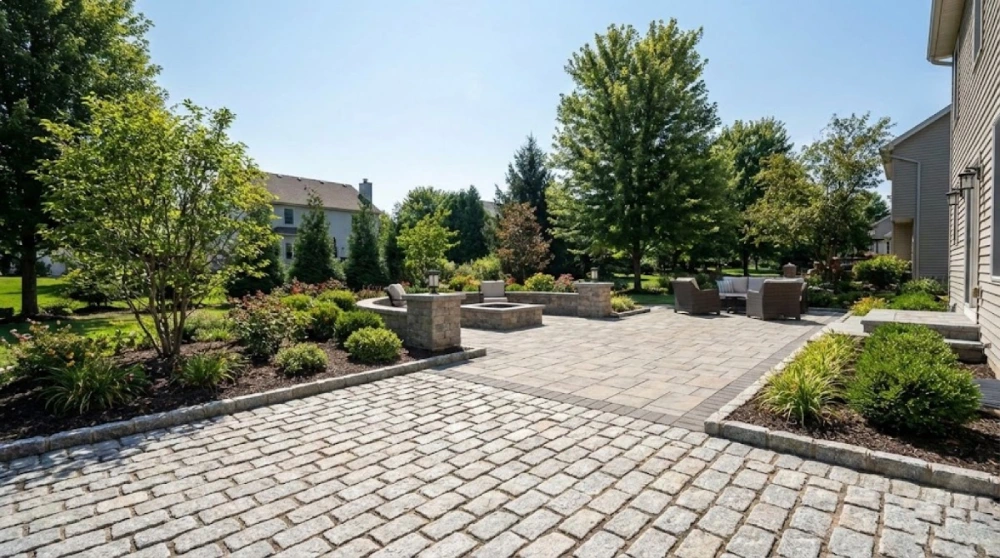
Why homeowners and property owners choose us:
- Proven Expertise: Skilled tradesmen using reliable methods and high-quality materials
- Wide Range of Surfaces: Resin Bound, Block Paving, Resin Bonded Gravel, Porcelain and Natural Stone Patios
- Full Project Services: Driveway Replacements, Extensions, Groundworks, Drainage, and Sub-Base Preparation
- Local Knowledge: Serving St Albans, Watford, Hemel Hempstead, Stevenage, Luton, Cambridge, Oxford, and more
- Reliable & Professional: Projects completed on time, on budget, with minimal disruption
- Durable, Low-Maintenance Results: Surfaces that enhance your property’s value and curb appeal
We are trusted across Hertfordshire, Essex & the Surrounding areas for delivering projects that exceed expectations. From your initial consultation to the finished surface, East Herts Surfacing & Driveways ensures professionalism, precision, and long-lasting quality, making us the preferred choice for all surfacing projects.
Where You Can Find Us?
East Herts Surfacing & Driveways is proudly based in Hertfordshire, providing high-quality driveway and surfacing solutions to local homeowners and businesses.
- Office Address: Yard 8, Stonebury Farm, Hare Street, Buntingford, Hertfordshire, United Kingdom
- Services Offered: Driveway installation, resurfacing, and full renovations
- Coverage: Hertfordshire and nearby areas
Our central location allows us to reach customers quickly and carry out site visits efficiently. Whether you need a brand-new driveway or improvements to an existing surface, our professional team is always within easy reach.
Office Hours:
- Monday–Friday: 09:00–17:00
- Saturday: 09:00–15:00
- Sunday: Closed
Contact Us: +44 800 054 8448
Areas We Cover Across Hertfordshire, Essex & Beyond
East Hertfordshire Driveways proudly serves homeowners and property owners across Hertfordshire, Essex, Bedfordshire, Cambridgeshire, and Oxfordshire. Our experienced team ensures every project is completed with precision, care, and high-quality materials.
Our key coverage areas include:
- Hertfordshire: St Albans, Watford, Hemel Hempstead, Stevenage, Hitchin, Welwyn Garden City, Hatfield
- Essex: Harlow, Epping, Chelmsford, Brentwood, Braintree
- Bedfordshire: Luton, Dunstable, Bedford, Leighton Buzzard
- Cambridgeshire: Cambridge, Ely, St Neots, Huntingdon
- Oxfordshire: Oxford, Banbury, Bicester, Didcot
Frequently Asked Questions
1. Can repairing concrete driveway cracks reduce the cost to repave or pave a driveway later?
Yes, timely crack repair prevents water damage and base failure, which can significantly lower the cost to repave or pave a driveway by extending the surface lifespan and avoiding full structural replacement.
2. Should you repair concrete driveway cracks before you seal coat or seal your driveway?
Absolutely. Cracks must be repaired before seal coating or sealing your driveway, as sealing over damage traps moisture, worsens cracks, and reduces the effectiveness and durability of the sealant.
3. How long after repairing cracks should you wait before sealing a concrete driveway?
After repairing cracks in a concrete driveway, wait 24 to 72 hours before sealing, depending on the repair material. This ensures proper curing and prevents sealing failure or premature cracking.
4. Can crack repair help maintain gravel or concrete driveways long-term?
Yes, repairing cracks in concrete helps prevent erosion that affects adjacent gravel areas, making it easier to maintain a gravel driveway while preserving a stable, long-lasting concrete surface.
Keep Your Driveway Crack-Free with Simple Steps
Cracks in your concrete driveway are an inevitable challenge, but they don’t have to escalate into costly repairs. With careful inspection, proper tools, and following effective concrete driveway repair tips, you can maintain your driveway’s durability and appearance.
East Herts Surfacing & Driveways serves Hertfordshire, Essex, and the surrounding areas with expert advice and services to keep your driveway in top shape at an affordable concrete driveway cost.
Whether DIY or professional help, prompt repair is your best defense against worsening damage and high resurfacing costs. Start today by spotting those sneaky cracks before they widen; your driveway (and wallet) will thank you!