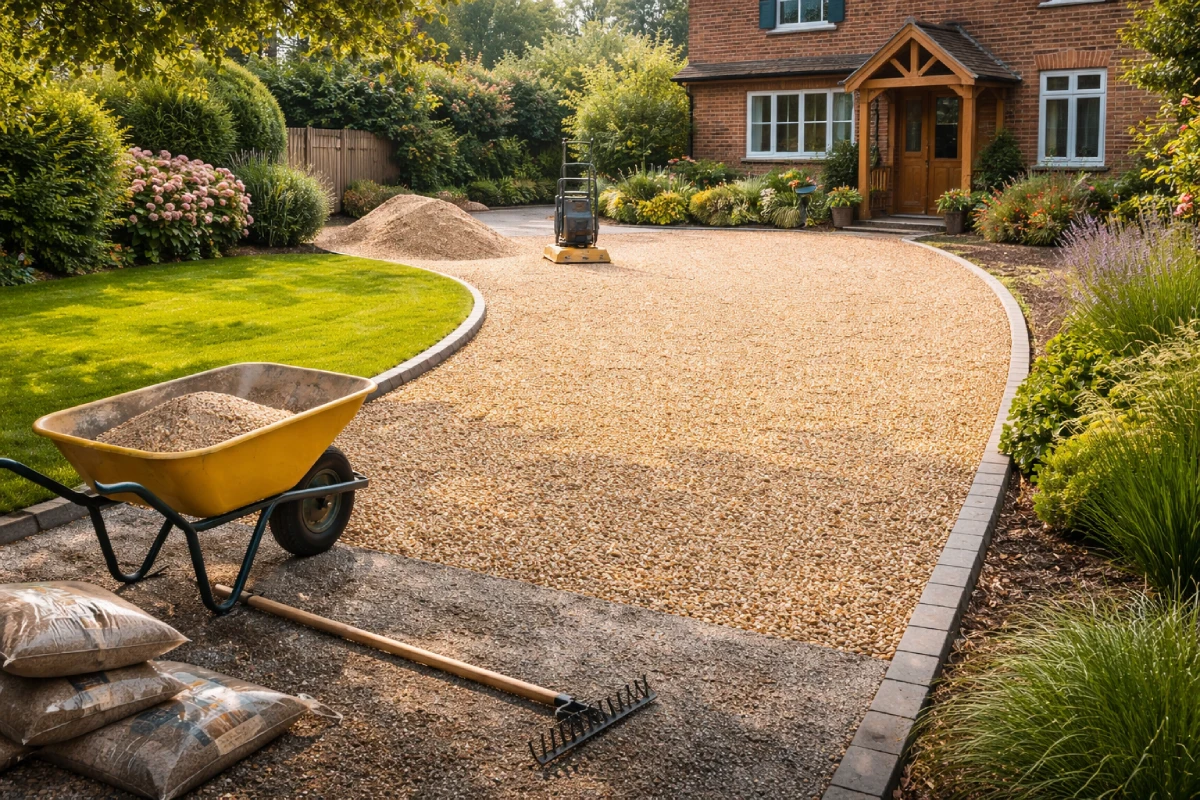
Considering installing a gravel driveway in the UK? Many property owners in Hertfordshire, Essex & the surrounding areas wrestle with choosing the right materials and methods. A poorly laid driveway leads to weed infestation, potholes, and uneven surfaces.
But with the right approach, you can enjoy a stunning, durable gravel driveway that adds both character and value to your home. This comprehensive gravel driveway guide UK covers every essential detail from how to prepare ground for a gravel driveway UK, through to maintenance tips that keep your surface pristine.
Whether you’re looking for DIY gravel driveway steps or prefer expert help from East Herts Surfacing & Driveways, understanding the process is your first step to success.
How to Install Gravel Driveway in the UK?
Installing a gravel driveway in the UK requires careful planning, proper groundwork, and the right materials. From measuring and excavation to laying a solid sub-base and finishing gravel, each step ensures good drainage, durability, and a long-lasting, attractive driveway.
Step 1: Planning and Measuring
Begin by defining the driveway boundaries accurately and marking them out using wooden stakes or spray paint. Make sure to factor in a slight slope of about 1-1.5% for effective water drainage.
This slope prevents puddles and helps prolong the material’s lifespan. Consult a gravel driveway cost calculator UK to estimate your budget based on area and materials.
Measure the total area carefully. This ensures you buy the right amount of gravel driveway materials UK and sub-base stones. You may also consider driveway ideas in the UK to decide on an appropriate width and shape that enhances your property’s curb appeal.
Choosing the right edging plays a crucial role in setting boundaries and preventing gravel from spilling over. Some popular gravel driveway edging options in the UK include plastic, stone, or metal trims. Selecting suitable edging early in the planning stage will influence excavation and installation.
Step 2: Excavation
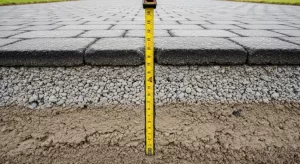
Once planned, excavate the driveway area to a depth of around 15-20cm. This zone will accommodate both the sub-base and gravel layers. Digging deep enough creates a solid foundation, crucial for long-lasting durability.
Remove all vegetation, topsoil, and roots from the surface. A clean base prevents unwanted weed growth, improving gravel driveway weed control and maintenance. Consider hiring driveway contractors UK for large or difficult sites to ensure precision.
After excavation, check the base for any hard or uneven spots and remove excess debris. Compact the soil lightly to create stability but avoid compressing it too much as it can affect drainage.
Step 3: Installing a Weed Control Membrane
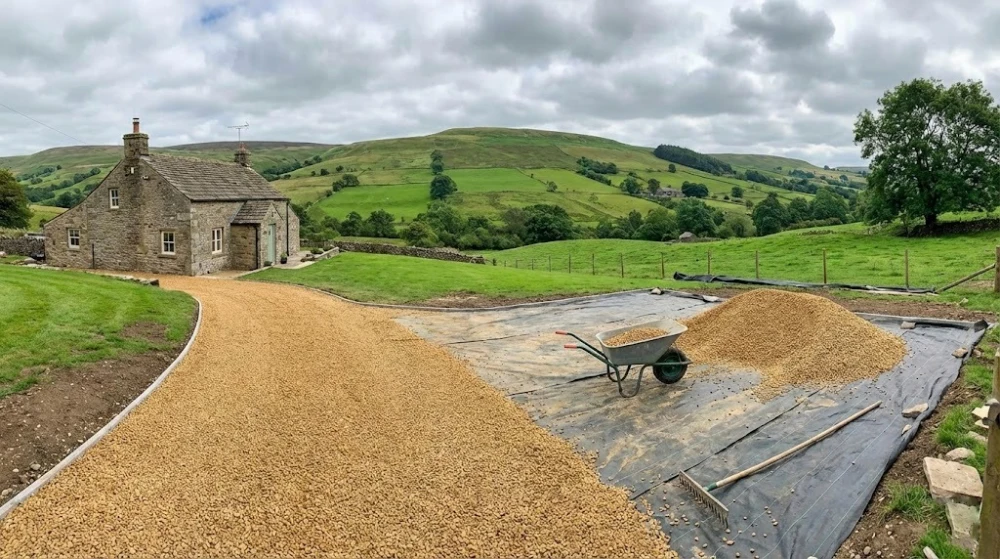
Lay a geotextile weed control membrane across the entire excavated area. This fabric acts as a barrier that stops weed seeds from sprouting through your gravel while allowing water to pass through naturally. Ensure the membrane covers every inch, overlapping edges by at least 10cm to prevent gaps.
Secure the fabric with garden staples to keep it firmly in place during sub-base installation. Using a membrane significantly reduces the need for chemical weed killers later, aligning with eco-friendly gravel driveway maintenance practices UK.
Step 4: Laying the Sub-Base
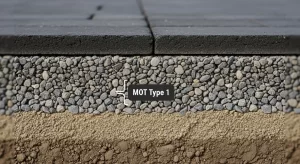
Next, spread a layer of MOT Type 1 sub-base crushed stone to a thickness of 10-15cm over the weed membrane. This layer provides strength and supports the gravel surface.
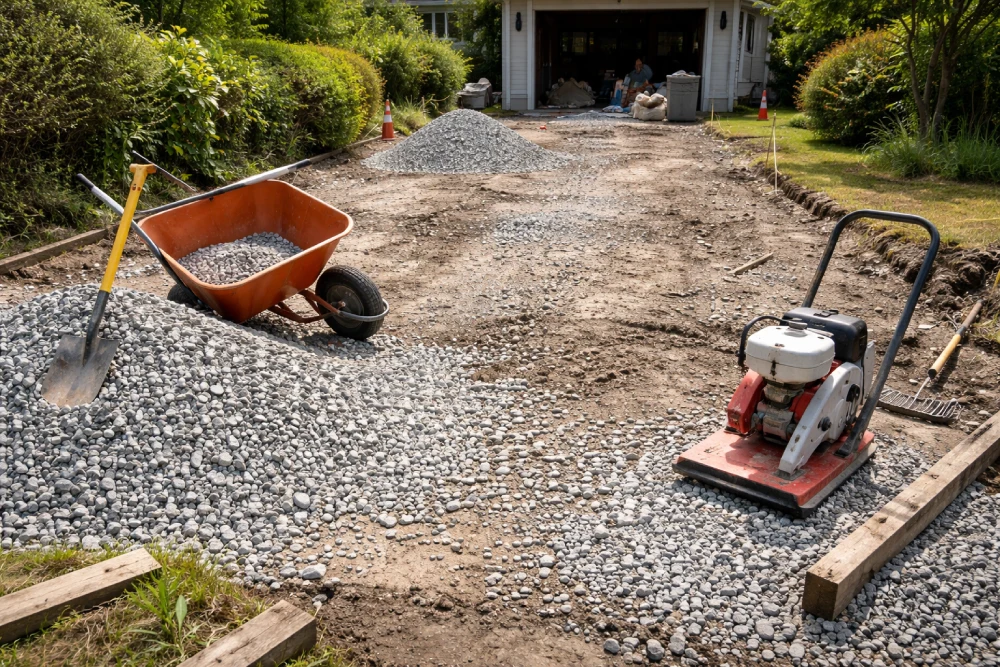
Compact the sub-base thoroughly using a plate compactor. Good compaction is key to preventing potholes and uneven spots caused by vehicle movement. Properly installing this foundation layer is often overlooked but essential in gravel driveway installation UK for a smooth, durable finish.
Step 5: Installing Edging
Install your chosen edging along the driveway’s perimeter before adding decorative gravel. Edging options in the UK vary from plastic flexi-edge trims to stone kerbs and metal borders. This step stops gravel migration and enhances the overall aesthetic.
Many local driveway companies near me recommend sturdy edging for longevity. Ensure the edging is level and firmly fixed into the ground to handle the pressure of gravel and traffic.
Step 6: Adding the Gravel
Finally, spread your decorative gravel evenly to a depth of about 50mm. The best gravel for a gravel driveway UK typically includes angular gravel for better lock and stability, compared to rounded stones that shift more. Rake the gravel to create an even surface and compact it lightly using a plate compactor.
If needed, install gravel grids underneath for extra stability, especially on sloped driveways. This finishing layer creates the attractive appearance and functional surface that makes gravel driveways popular in the UK.
Types of Gravel Suitable for UK Driveways
Choosing the right gravel is essential for a durable UK driveway. From decorative pea gravel to robust MOT Type 1 sub-bases and stable angular stones, each option plays a key role in performance, drainage, and long-term stability.
Pea Gravel
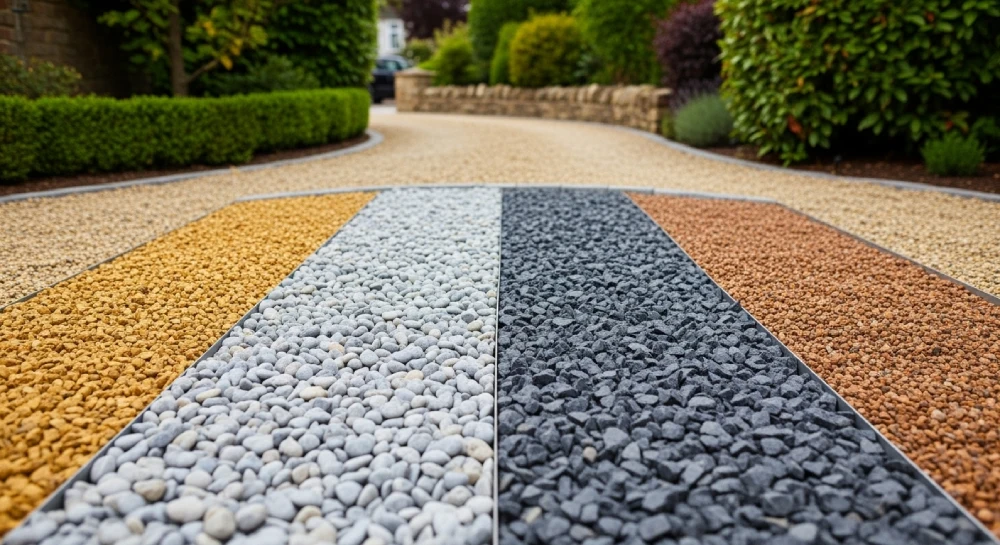
Pea gravel features small, smooth, rounded stones around 4-8mm in size. It offers a softer, decorative finish but is less stable under heavy traffic. It’s suited for lighter-use areas and aesthetic appeal.
However, pea gravel can shift more easily, so pairing it with a firm sub-base and edging is vital. Consider this option when style overrides heavy-duty use.
MOT Type 1 Sub-Base
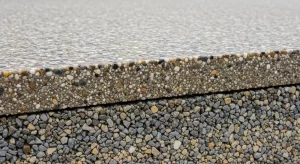
MOT Type 1 is a crushed rock mix used beneath the gravel layer. It compacts tightly and provides excellent drainage, making it essential for all gravel driveway installations in the UK. This sub-base prevents potholes and depressions, sustaining the driveway’s structural integrity over time.
Angular Gravel vs Rounded Gravel
Angular gravel has jagged edges that lock together, offering superior stability and resistance to movement. It’s preferred for driveways due to its durability.
Rounded gravel looks smoother but shifts more easily under pressure, which can cause uneven surfaces. For driveway use, angular gravel provides a more secure and lasting finish.
Common Mistakes to Avoid When Laying a Gravel Driveway
Avoiding common mistakes is essential when laying a gravel driveway in the UK. Errors like skipping the sub-base, choosing the wrong gravel size, poor drainage planning, and missing edging can lead to sinking, erosion, and costly long-term maintenance.
Skipping the Sub-Base
Neglecting the sub-base is a frequent error that significantly reduces driveway lifespan. Without a solid MOT Type 1 base, the gravel layer will sink and develop potholes quickly. Always invest in preparing a strong base, as it underpins the entire gravel driveway installation UK process.
Using the Wrong Gravel Size
Gravel that is too fine or too rounded can move excessively under load. This leads to rutting and uneven surfaces. Choose angular gravel of the correct size (typically 10-20mm) for longevity. Consult local gravel driveway suppliers UK to source the right materials suited to your driveway’s requirements.
Poor Drainage Planning
Failing to incorporate a slight slope or proper drainage channels causes water pooling and erosion. Always plan for a 1-1.5% gradient and consider driveway drainage tips like installing a crown or French drains if needed. Good drainage extends the life of your gravel driveway and prevents maintenance headaches later.
No Edging Installed
Without edging, gravel spreads into adjacent areas, losing material and creating an untidy look. Proper edging not only retains gravel but adds neat lines and finishes. Use durable edging options suited to your landscape and traffic conditions to reduce future upkeep.
Driveway & Patio Installers You Can Rely On
East Herts Surfacing & Driveways has over 20 years of experience delivering premium driveway and patio solutions across Hertfordshire and surrounding counties. We focus on durability, appearance, and stress-free installations.
Reasons to Work With Us:
- Expert craftsmanship with premium materials
- Wide choice of surfaces to suit every property style
- Complete service including replacements, extensions, drainage, and groundworks
- Trusted across St Albans, Watford, Luton, Cambridge, Oxford, and nearby areas
- Professional, efficient, and reliable installation teams
- Long-lasting finishes that enhance kerb appeal and value
Where We’re Based in the UK?
East Herts Surfacing & Driveways operates from Buntingford, Hertfordshire, making it easy for us to support customers throughout the local area. From first contact to project completion, our location helps us deliver prompt and reliable service.
Find Us At: Yard 8, Stonebury Farm, Hare Street, Buntingford, Hertfordshire
Call Us: +44 800 054 8448
Our Services Include:
We proudly work with homeowners and businesses across East Hertfordshire. Whether you need advice, a quote, or a site visit, our team is always happy to help.
Office Hours:
- Mon–Fri: 09:00–17:00
- Sat: 09:00–15:00
- Sun: Closed
Reliable Driveway & Patio Services Across Your Local Area
East Herts Surfacing & Driveways delivers professional driveway, patio, and surfacing solutions across Hertfordshire and nearby counties. Our deep local knowledge ensures each installation meets high standards of durability and design.
Areas We Operate In:
- Hertfordshire
- Essex
- Bedfordshire
- Cambridgeshire
- Oxfordshire
Including key towns such as St Albans, Watford, Luton, Cambridge, Oxford, and more. Wherever you’re based within our coverage, you can expect reliable service, skilled workmanship, and results built to last.
FAQs
How does laying a gravel driveway compare to installing a stone or resin driveway in terms of cost?
Gravel driveways are significantly more affordable than stone or resin driveway options. While resin driveways cost more upfront, gravel allows easy installation, budget flexibility, and simpler long-term maintenance for homeowners.
How long do gravel driveways last compared to resin driveways if properly maintained?
A well-maintained gravel driveway can last decades with periodic leveling and replenishment. Resin driveways also last long but require a higher upfront investment and professional installation, making gravel a flexible and durable alternative.
Is repairing cracks in a concrete driveway necessary before installing or maintaining a gravel driveway?
Yes, repairing concrete cracks first prevents drainage issues that can undermine a gravel driveway’s base. Stable surrounding surfaces improve gravel longevity, reduce erosion, and ensure smoother transitions between driveway materials.
Master Your Gravel Driveway Installation and Maintenance
Laying and maintaining a gravel driveway in the UK doesn’t have to be daunting. By following these detailed DIY gravel driveway steps, you can create a visually appealing and durable surface that withstands British weather and daily wear.
Remember, success relies on careful planning, a solid sub-base, correct gravel choice, and regular maintenance, including raking and weed control.
If you prefer, East Herts Surfacing & Driveways offers expert services covering Hertfordshire, Essex & the surrounding areas to handle everything from driveway installation UK through to cleaning service and repairs. Start your project armed with these gravel driveways tips & tricks