A steep driveway might look impressive, but when it’s not calculated correctly, it quickly becomes a problem. Cars scrape, water floods, and surfaces become dangerously slippery, especially in the UK’s wet climate. Many homeowners underestimate how critical accurate slope calculation really is.
This issue only worsens over time. Poor gradient planning leads to higher driveway paving costs, frequent concrete driveway repair, and even complete resurfacing. What starts as a small miscalculation can turn into a costly structural failure.
The solution? Understanding how to properly calculate and design driveway gradients from the start. In this guide, you’ll learn the exact formulas, UK standards, and expert tips, but more importantly, how to apply them correctly for long-term durability.
Calculate Your Driveways Gradient and Slope for Steep in UK
Getting the gradient right is the foundation of a safe and functional driveway. In the UK, where rain and frost are common, improper slope design can lead to drainage failures and costly repairs.
Understanding Rise and Run Measurements
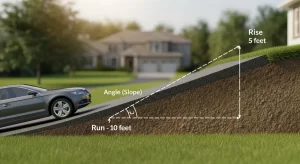
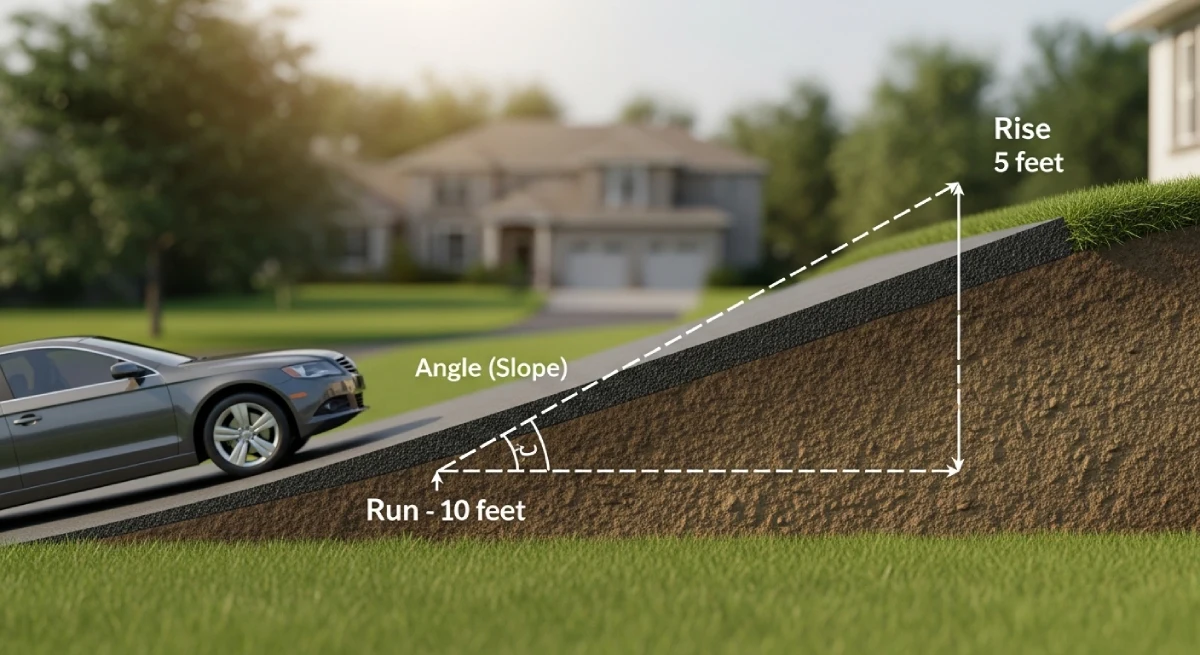
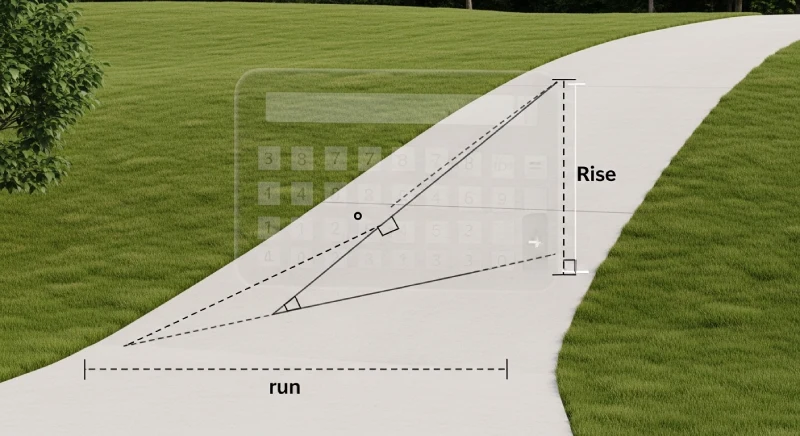
To calculate any slope, you must first understand the two key elements: rise and run. These measurements determine how steep your driveway will be and how it performs under daily use.
The rise refers to the vertical height difference between the top and bottom of your driveway. This is measured straight up and down, not along the slope. Even a small error here can affect your entire gradient calculation.
The run is the horizontal distance between those two points. It’s important to measure along the ground, not the slanted surface. This ensures accuracy when calculating ratios or percentages.
Accurate rise and run measurements are essential for:
- Preventing vehicle scraping
- Ensuring proper drainage
- Avoiding future concrete drive repair costs
- Maintaining safe traction during wet weather
A professional driveway specialist Hertford will always prioritise these measurements before starting any project.
Step-by-Step Method to Measure Driveway Slope
Measuring a slope correctly doesn’t require advanced tools, but it does require precision. A simple stake-and-string method is widely used across UK driveway projects for reliable results.
Start by placing one stake at the top of the slope and another at the bottom. Tie a string between them and use a spirit level to ensure the string is perfectly horizontal. This step is crucial because it creates a reference line.
Next, measure the vertical distance from the string down to the ground at the lower stake. This gives you the rise. Then measure the horizontal distance between both stakes to get the run.
Follow these steps carefully:
- Use a spirit level for accuracy
- Keep measurements in the same unit (meters or cm)
- Double-check alignment before recording data
This method helps avoid errors that could later increase repaving driveway costs or require cement driveway crack repair due to poor design.
Gradient Calculation Formulae Explained
Once you have your rise and run, calculating the slope becomes straightforward. There are three common ways to express gradient: ratio, percentage, and degrees.
The ratio format (1:N) is the most commonly used in the UK. For example, a 1:10 gradient means the driveway rises 1 unit for every 10 units of horizontal distance. This format is easy to understand for construction purposes.
The percentage method is widely used for planning and regulations. You calculate it by dividing rise by run and multiplying by 100. For instance, a 2m rise over 20m run equals a 10% slope.
Key calculation formats:
- Ratio: 1:10 (easy reference)
- Percentage: 10% (common in planning)
- Degrees: Used for engineering precision
Understanding these calculations helps control driveway paving prices and ensures your project meets UK standards.
UK Driveway Gradient Standards and Safety Guidelines
UK regulations and best practices exist to ensure driveways are safe, accessible, and durable. Ignoring these guidelines can lead to unsafe driving conditions and costly redesigns.
Recommended Gradient Limits for Residential Driveways
In the UK, a 1:20 (5%) gradient is considered ideal for residential driveways. This provides smooth access for vehicles and pedestrians while minimising drainage issues.
When slopes exceed 1:10 (10%), they are considered steep. At this level, traction becomes a concern, especially in wet or icy conditions. Extra safety measures are often required.
The maximum recommended slope is around 15% (1:6.6). Beyond this, driveways become difficult to use safely and may require specialist surfacing solutions.
Important benchmarks:
- Ideal: 5% (1:20)
- Steep: 10% (1:10)
- Maximum: 15%
Exceeding these limits can increase driveway paving cost due to additional materials and engineering.
Accessibility and Drainage Considerations
Driveways are not just for vehicles, they must also accommodate pedestrians. For accessibility, especially for wheelchairs or pushchairs, slopes should not exceed 1:12 (8.33%).
Drainage is another critical factor. Without proper slope design, water will pool or flow too quickly, causing erosion and surface damage. Typical drainage gradients range between 1:60 and 1:80. These ensure water flows away without damaging the driveway surface.
Failure to address drainage can lead to:
- Surface cracking
- Increased cement driveway repair needs
- Slippery conditions
Proper planning reduces long-term driveway paving costs significantly.
Practical Tips for Designing Steep Driveways in the UK
Designing a steep driveway requires more than calculations. Material choice, drainage systems, and transitions all play a role in performance and longevity.
Best Materials for High-Gradient Driveways
Material selection is crucial for steep driveways. Smooth surfaces can become dangerous in wet conditions, so high-grip materials are essential.
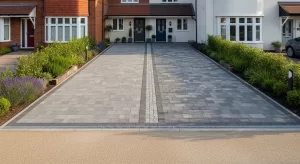
Block paving, textured tarmac, and resin-bound surfaces are popular options. If you’re considering resin bound driveways Hertford, ensure the aggregate provides sufficient grip.
Gravel can also work, but only with stabilisation grids to prevent movement. Without proper support, gravel will shift and create uneven surfaces.
Recommended materials:
- Textured tarmac
- Block paving
- Resin-bound surfaces
- Stabilised gravel
Choosing the right material reduces long-term concrete driveway cost near me concerns.
Drainage Solutions and Transition Zones
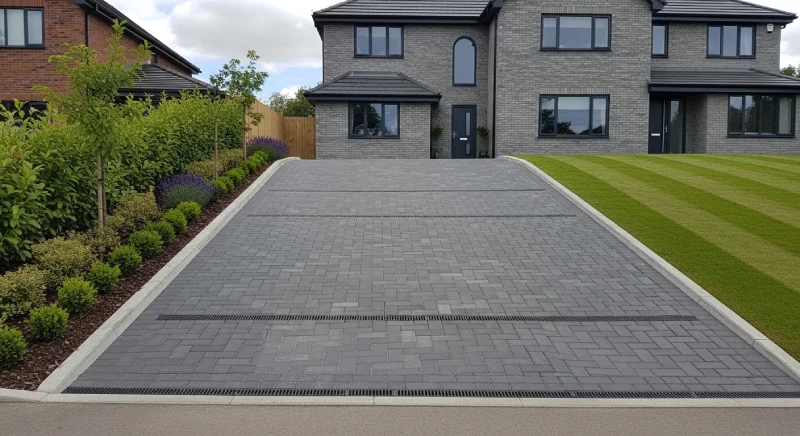
Steep driveways require advanced drainage systems. Water flows faster on slopes, increasing the risk of flooding and erosion. Installing drainage channels at the base of the driveway is essential. These systems capture water before it reaches your property or public pathways.
Transition zones are equally important. These are gradual slope changes at the entrance and exit, preventing vehicles from scraping.
Key design features:
- Heavy-duty drainage channels
- Gradual transition slopes
- Anti-slip finishes
These additions help control the price of asphalt driveway maintenance over time.
Why Is East Herts Driveway the Smart Choice for Your Project?
Choosing the right contractor is just as important as choosing the right design. At East Herts Driveway, we combine technical expertise with over 20 years of experience in surfacing and paving across Hertfordshire.
We understand the complexities of steep driveway construction. From accurate gradient calculations to long-lasting materials, every project is handled with precision and care.
Our services include everything from concrete driveway repair to full installations. We also provide honest advice on driveway paving prices and help you avoid unnecessary costs.
Why clients trust us:
- Over 20 years of industry experience
- Free surveys and no-obligation quotes
- Competitive and transparent pricing
- Residential and commercial expertise
Visit Our Hertfordshire Location or Get a Free Quote Today
We are conveniently located at Yard 8, Stonebury Farm, Hare Street, Buntingford, Hertfordshire. Our team is available throughout the week to discuss your driveway needs and provide expert guidance.
You can visit us during our office hours or contact us directly for a free consultation. We pride ourselves on offering friendly, professional service without any pressure to commit.
Address: Yard 8, Stonebury Farm, Hare Street, Buntingford, Hertfordshire, UK
Location MAP: Stonebury Farm
Call: +44 (0) 8000 548448
Email: quotes@easthertssurfacing.co.uk
We’re here to help you plan the perfect driveway with confidence.
Areas We Cover Across Hertfordshire and Beyond
We proudly serve customers across East Hertfordshire and surrounding areas. Whether you need a new installation or concrete drive repair, our team is ready to assist.
Our coverage includes residential and commercial projects, ensuring every client receives the same high standard of workmanship.
Areas we cover include:
- Hertford
- Buntingford
- Ware
- Bishop’s Stortford
- Surrounding villages
No matter your location, we bring expert solutions tailored to your needs.
FAQs
Are resin driveway problems common in the UK?
Resin driveways are generally durable, but issues can arise if installed incorrectly. Common problems include cracking, poor drainage, and surface loosening. These are usually caused by inadequate base preparation or low-quality materials.
Choosing an experienced installer significantly reduces these risks. Regular maintenance also helps extend the lifespan of resin surfaces.
Do resin driveways fade over time?
Yes, resin driveways can fade slightly over time due to UV exposure. However, high-quality UV-stable resin significantly reduces discolouration. Most modern installations are designed to maintain their appearance for many years. Proper sealing and maintenance also help preserve colour and finish.
Why are driveways slippery in rain?
Driveways become slippery when water reduces surface friction. Smooth materials like polished concrete or poorly installed resin are more prone to this issue. Adding textured finishes or anti-slip coatings improves safety. Proper drainage also prevents water buildup, reducing slip hazards.
How can I protect my driveway from tree roots?
Tree roots can cause cracks and surface lifting over time. Installing root barriers during construction is the best prevention method. Regular inspections help identify early signs of damage. In some cases, adjusting nearby landscaping can reduce root intrusion risks.
What is the best way to de-ice a driveway?
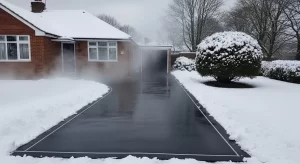
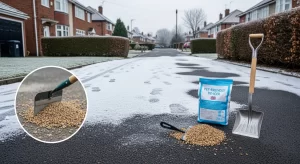
Use non-corrosive de-icing products like calcium magnesium acetate instead of traditional rock salt. These are safer for surfaces and the environment. Avoid excessive use, as it can damage certain materials over time. Clearing snow promptly also reduces ice formation.
Final Thoughts on Calculating Driveway Gradient Correctly
Properly calculating the gradient of a steep driveway is essential for safety, durability, and long-term cost savings. By understanding rise, run, and UK standards, you can avoid common issues like drainage failure and surface damage.
Combining accurate calculations with expert installation ensures your driveway performs well in all conditions. Whether you’re planning a new project or considering cement driveway repair, working with professionals like East Herts Driveway guarantees reliable results and lasting value.